From forest communities to polar science: Prince Albert II of Monaco Foundation advances environmental cooperation at COP31
Événements
Communiqué de presse
Initiative
Through its Forests & Communities
Initiative and Polar Initiative, the Foundation brought together international
partners to advance community-led climate resilience, sustainable financing and
cooperation.
The Prince Albert II of Monaco
Foundation contributed to discussions at COP31 in Antalya, Türkiye, through
two events held on Tuesday, 17 November, addressing complementary challenges in
environmental protection: the urgent need to scale up and improve direct access
to climate finance for Indigenous Peoples and Local Communities in the
conservation of tropical forests, and strengthening international cooperation
in the polar regions.
FROM COMMUNITY PRIORITIES TO CLIMATE
RESILIENCE
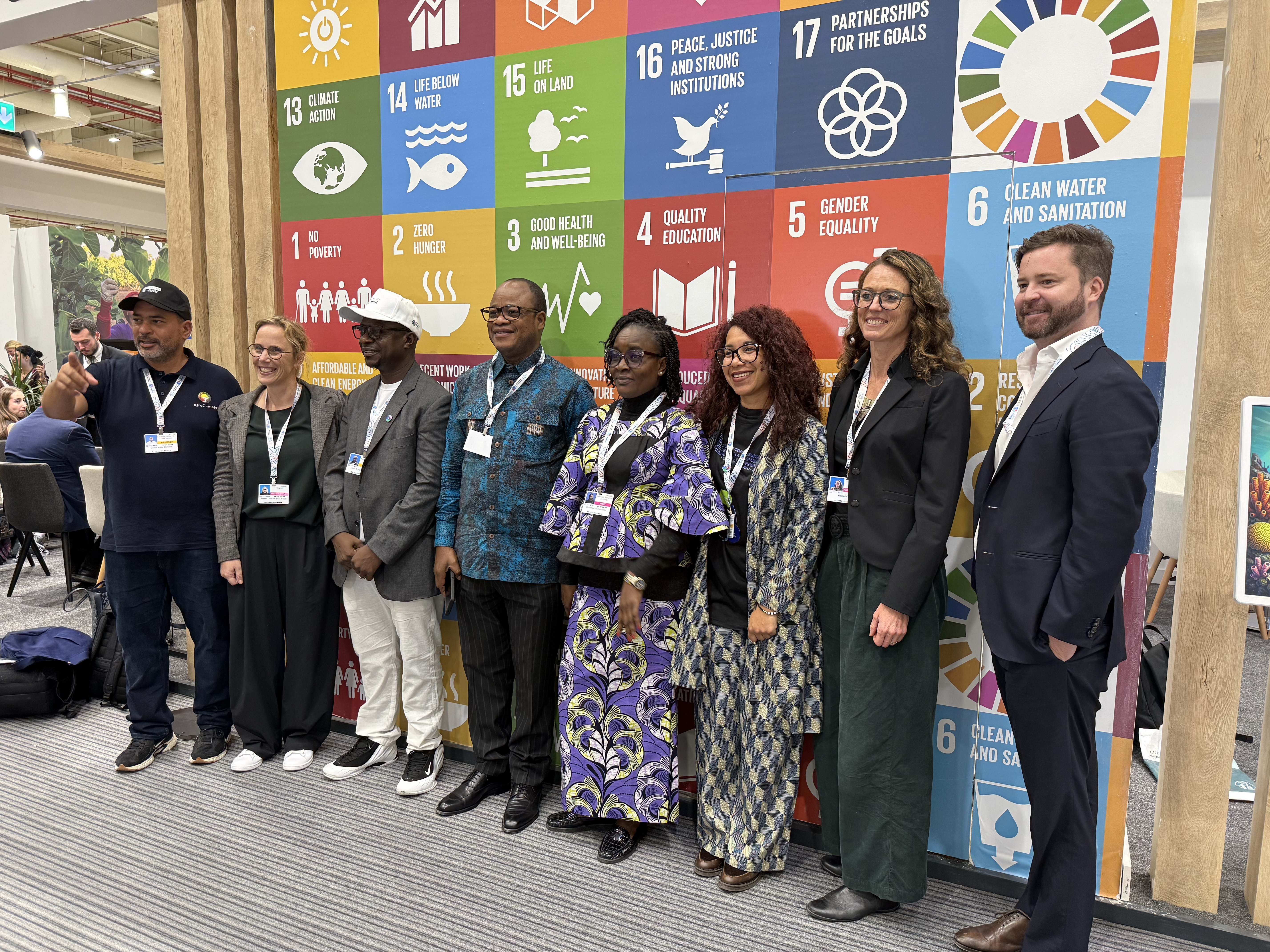
At the United Nations SDG Pavilion,
the Foundation's Forests & Communities Initiative (FCI) hosted the
session “From Community Priorities to Climate Resilience: Financing
Sustainable Livelihoods for Indigenous Peoples and Local Communities in Forest
Landscapes”, co-organised with the Centre des Technologies Innovatrices
pour le Développement Durable (CTIDD) and the AfroClimate Foundation.
The discussion explored how
community-led livelihoods can contribute to both climate resilience and forest
conservation, while emphasising that finance alone is not sufficient. Secure
rights, effective local governance, tailored technical assistance,
organisational strengthening and access to markets all play a critical role in
enabling locally led initiatives to develop over time.
A central message emerging from the exchanges
was that support should be organised around the trajectory and priorities of
community-led initiatives, rather than around the mandates or instruments of
individual funders.
Against this backdrop, FCI presented
its emerging Community Forest Finance Lab, an incubation model that will
help selected community-led initiatives develop viable, conservation compatible
livelihoods and access appropriate technical and financial support over time —
without making external investment an end in itself.Its proposed first
pilot in Équateur Province, Democratic Republic of Congo, covering Bolomba,
Basankusu and Mbandaka is built on FCI's existing partnership with CTIDD and
brings in AfroClimate Foundation as a technical assistance partner. Potential revenue-generating
activities include agroforestry, forest restoration, beekeeping and non-timber
forest product value chains.
The event was opened by Professor
Joseph Malassi, Deputy Chief of Staff of the Delegate Minister in Charge of
the New Climate Economy of the Democratic Republic of Congo Ministry of
Environment, whostressed that “Communities are at the heart of the
solution, not mere beneficiaries.”
A fireside discussion brought together Patrick
Kipalu, Africa Director at the Rights and Resources Initiative, and Chouchouna
Losale, Programme Officer at the Coalition des Femmes Leaders pour
l’Environnement et le Développement Durable (CFLEDD), to examine the realities
of climate resilience in tropical forest landscapes and the importance of
grounding external support in community-defined priorities.
Moderated by Casey Box, Global
Relations & Partnerships Officer at the International Land and Forest
Tenure Facility, the panel then focused on the practical conditions required to
move from community priorities to sustained support. It brought together Justine
Furtado Fernandes, Forests and Communities Initiative Manager at the Foundation;
Trésor Bondjembo Itamba, Executive Director of CTIDD; Gaëtan
Etancelin, Chief Operating Officer of the AfroClimate Foundation; and Evelien
Masschelein, Director of Expertise & Think at Enabel. Rachel
Clausing, Special Advisor and Head of Initiatives at the Foundation, opened
and closed the session.
The exchanges highlighted a shared priority:
creating a more coherent pathway in which grants, technical assistance, public
and concessional support, market partnerships and, where appropriate,
responsible investment can be mobilised at the right stage — while keeping
community priorities, rights and forest conservation outcomes at the centre.
STRENGTHENING INTERNATIONAL POLAR
COOPERATION AHEAD OF IPY5
Earlier that day, at the Cryosphere
Pavilion, the Foundation's Polar Initiative organised the panel “A
Call to Action: Developing Polar Flagship Programmes for IPY5”. The event
aimed to present the recent Call to Action launched by the initiative, together
with two mechanisms designed to support its implementation: the Call for
Expressions of Interest and the Polar Programme Development Grant.
Bringing
together Rachel Clausing, Special Adviser and Head of Initiatives,
and Salomé Mormentyn, Polar Initiative Manager, from the
Foundation, alongside Pam Pearson, Director of the International Cryosphere
Climate Initiative, Michael Meredith, Science Leader at the British Antarctic
Survey, and Gary Wilson, President of the Scientific Committee on Antarctic
Research (SCAR), the panel highlighted the urgency of placing polar regions firmly
on the international climate and environmental agenda.
The panellists
emphasised that it is not too late to act. While the impacts of climate change are
already unfolding in the polar regions, some consequences can still be avoided and
some changes remain reversible. Urgent, coordinated international action is needed
to protect the poles, an essential part of safeguarding the planet as a whole.
Building on the Monaco
Polar Symposium 2026, the Call to Action seeks to bring international partners together
around 17 potential flagship initiatives ahead of the Fifth International
Polar Year (IPY5, 2032–2033) and start implementing now. The Call for Expressions
of Interest invites organisations and individuals to identify potential contributions
in expertise, capacities and resources, while the Polar Programme Development Grant
aims to support the early development of selected proposals into structured, coordinated
international programmes.
“Through these two initiatives, we are
addressing different environmental challenges with a shared conviction: lasting
solutions depend on scientific knowledge, the involvement of the communities concerned
and sustained international cooperation. At COP31, our aim is to bring together
partners capable of turning these priorities into practical action, while developing
the financing mechanisms needed to support them over time.” Romain Ciarlet, Vice-Chairman and CEO
of the Prince Albert II of Monaco Foundation.
The Foundation also contributed to wider
COP31 discussions on climate finance and the ocean. On 16 November, Rachel Clausing
joined a panel at the Morocco Pavilion on “Ocean & Climate: Scaling up the
Impact of Foundations and Non-State Actors in Accelerating Climate Action”. The
event, organised by the Mohammed VI Foundation for Environmental Protection,
examined how foundations can support climate action in coastal territories.
The Foundation also supported the “Access
to Climate Finance for Small Island Developing States (SIDS) and Least Developed
Countries (LDCs)” Statement and Action Plan, presented at a signatory event
on 13 November. The statement calls for climate finance that is more accessible
and better adapted to the needs of vulnerable countries.