Empowering Communities for Stronger Forests: Women, Youth, and Indigenous Leaders Take the Stage at COP30 Brazil
Events
Initiative
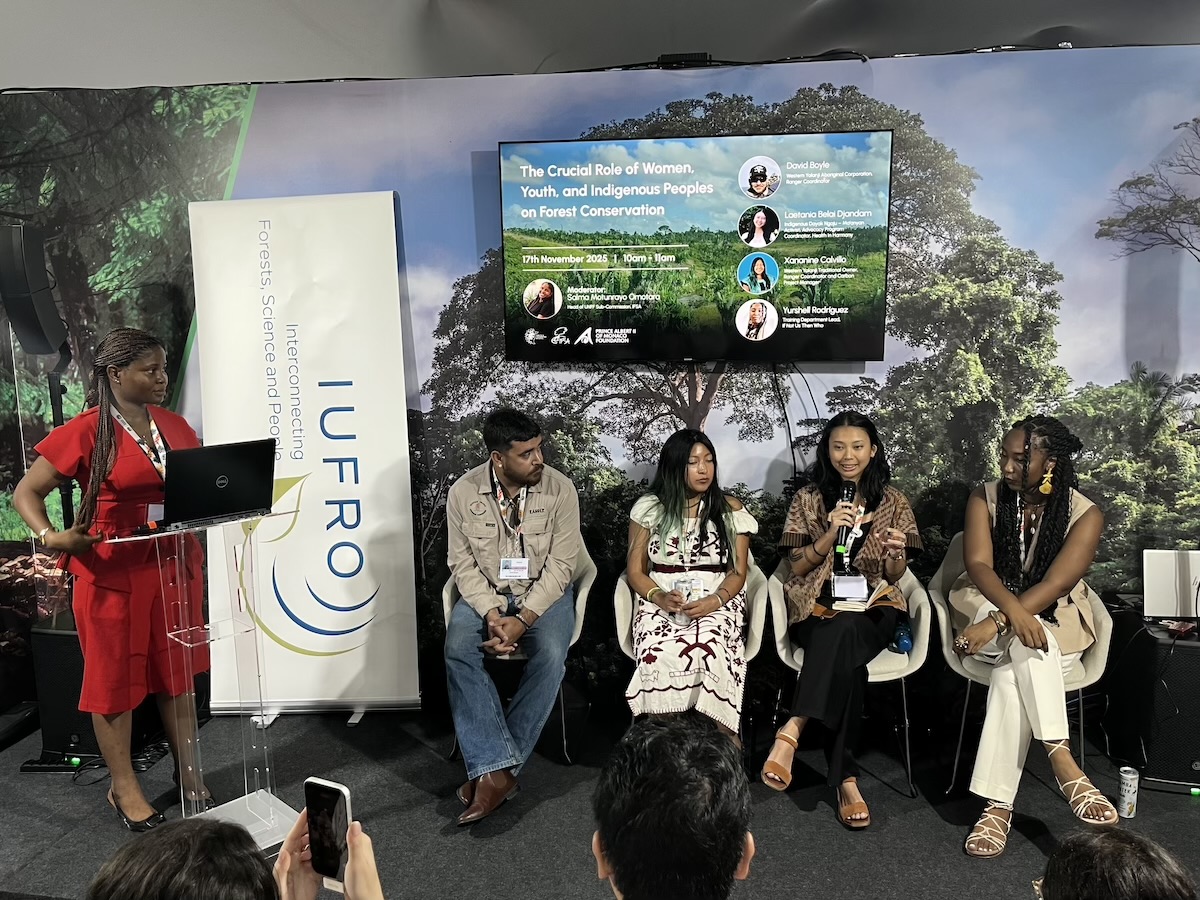
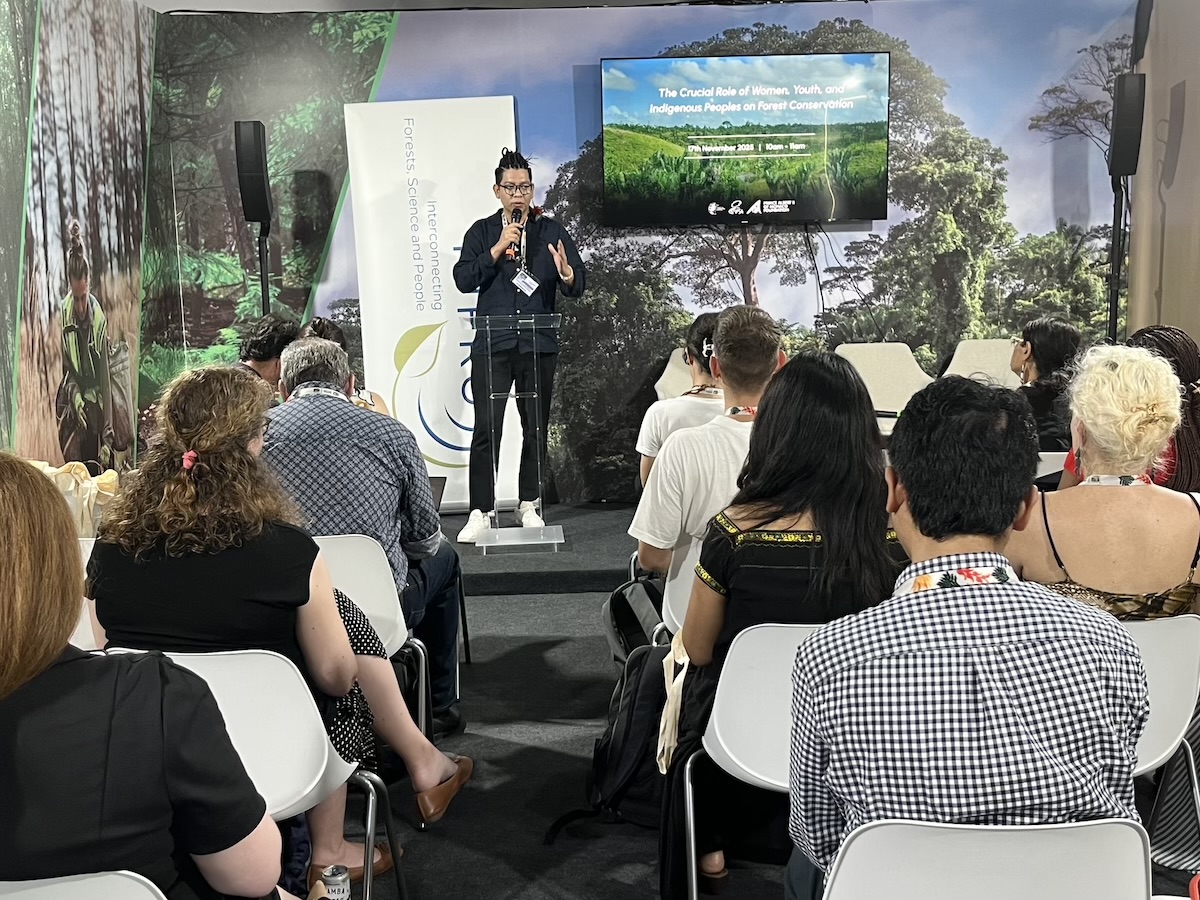
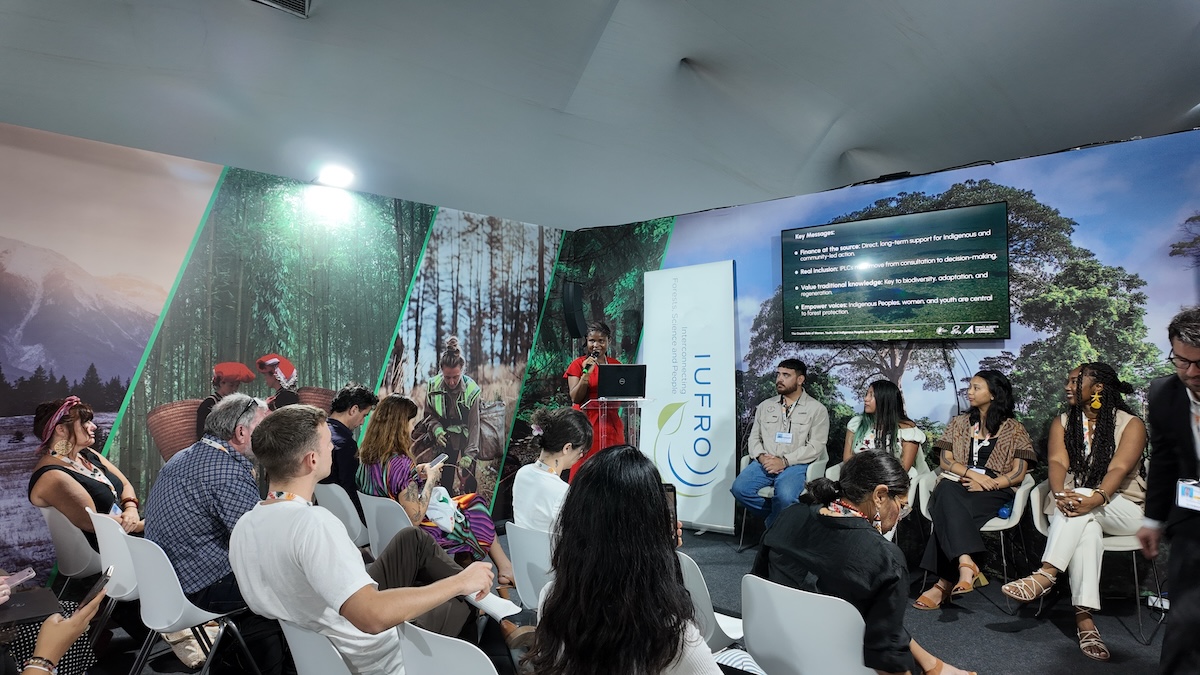
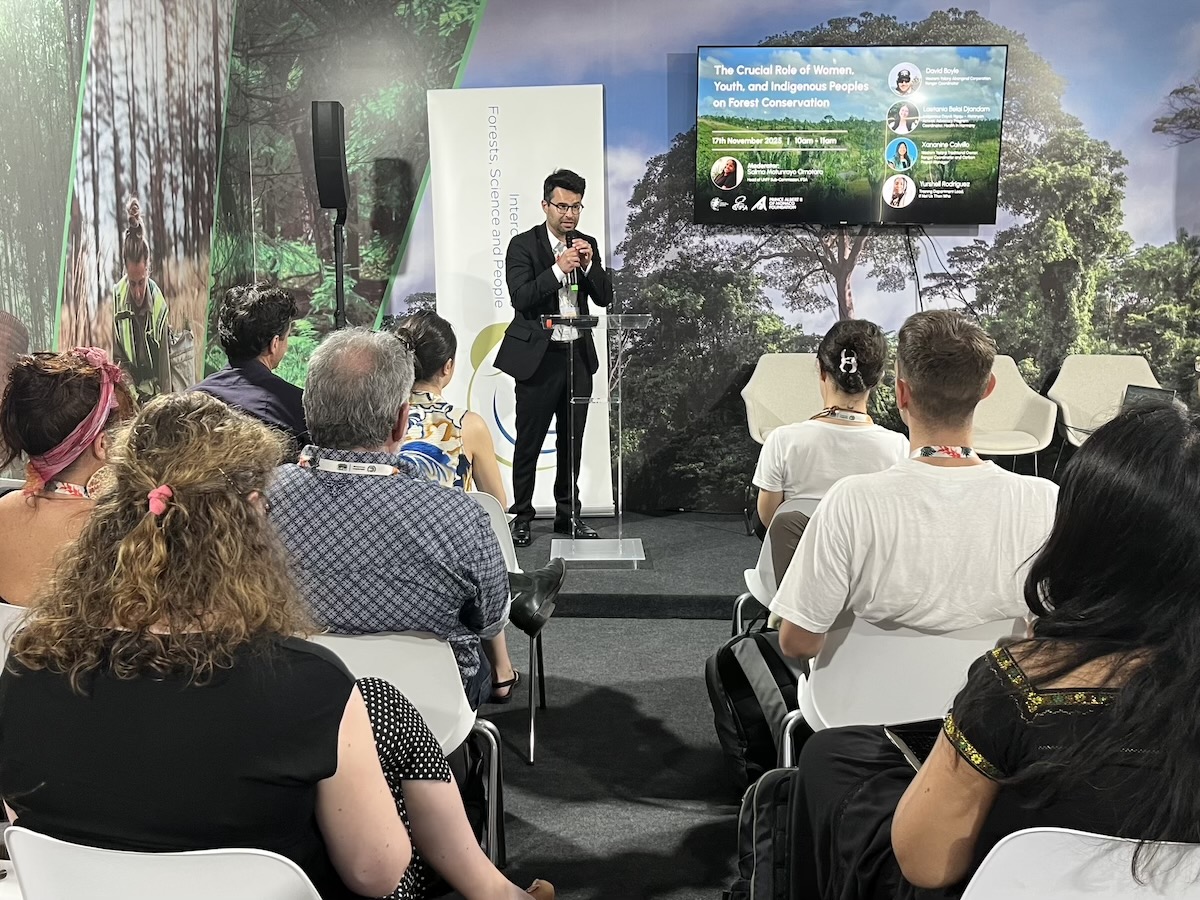
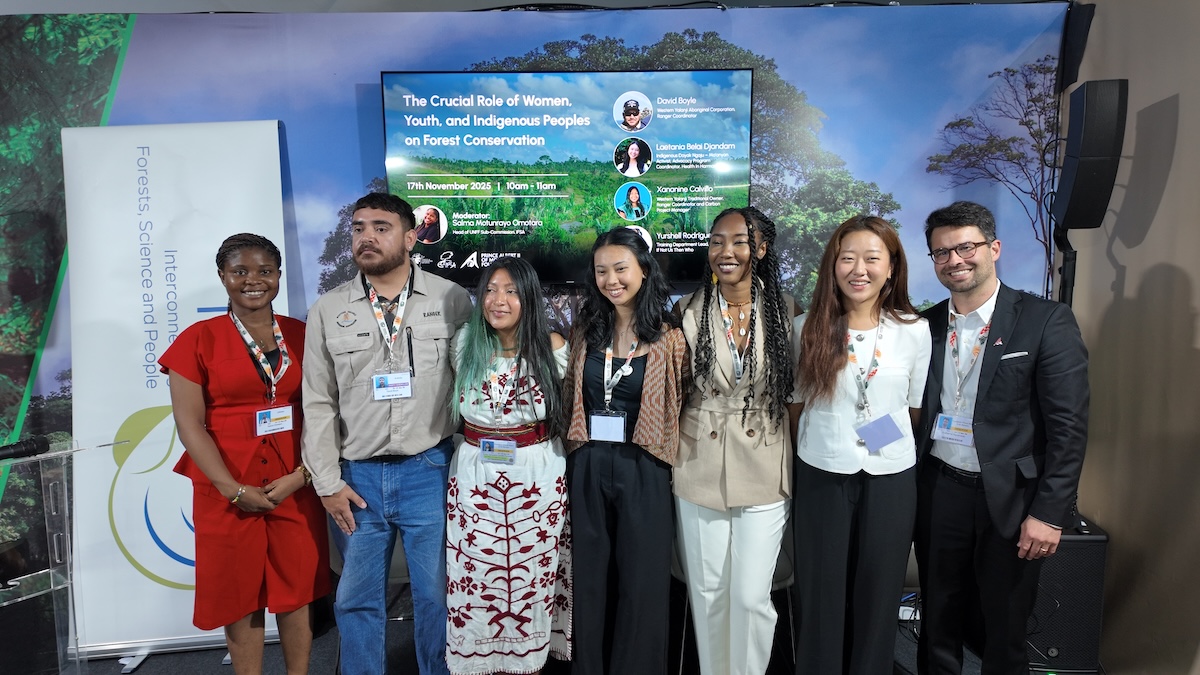
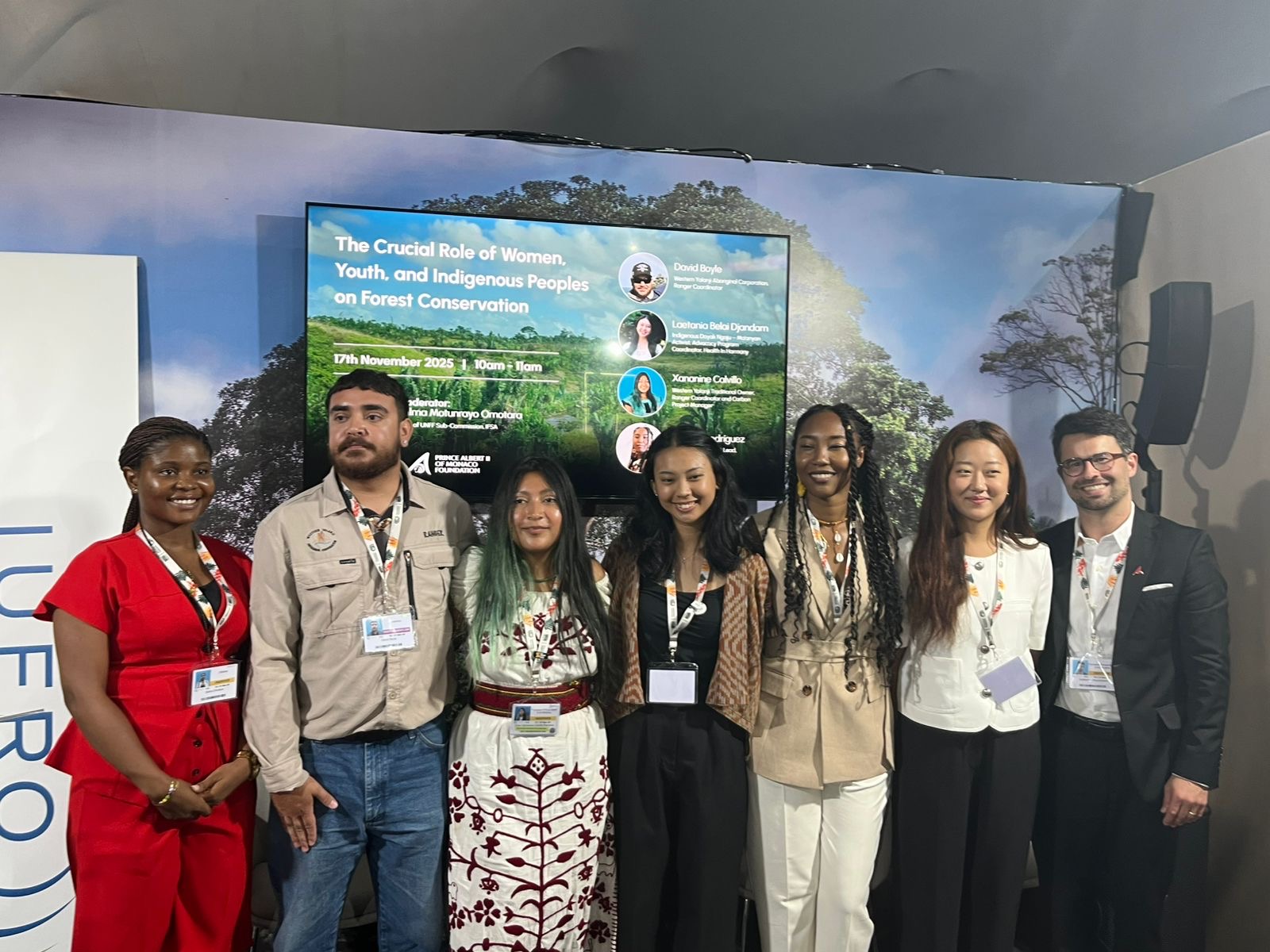
At the Forest Pavilion during COP30 Brazil, the Prince Albert II of Monaco Foundation—through its Forests & Communities Initiative—partnered with the International Forestry Students’ Association (IFSA) to host a compelling panel discussion on an increasingly urgent theme: “The crucial roles of women, youth, and Indigenous Peoples in forest conservation”.
Moderated by Salma Motunrayo Omatara, the session brought together insights from Eric Terena, Erika Xananine Calvillo Ramirez, Laetania Belai Djandam, Yurshell Rodríguez Hooker, and David Boyle. Throughout the discussion, speakers emphasized a core message: effective forest protection requires genuine inclusion. Communities must be recognized not just as stakeholders but as leaders and rights-holders with the authority to shape conservation outcomes.
Key Messages from the Session
Communities must move from consultation to real decision-making power
Panelists underscored that meaningful conservation cannot rely on top-down approaches. Indigenous Peoples, women, and youth must hold formal roles in governance and forest management if long-term progress is to be achieved.
Traditional knowledge is indispensable for resilience and restoration
Ancestral knowledge systems are critical for biodiversity protection, climate adaptation, and ecosystem restoration. When woven into modern conservation strategies, they produce solutions that are both effective and culturally grounded.
Climate solutions must be funded at the source
Speakers highlighted the need for funding mechanisms that channel long-term resources directly to Indigenous and community-led initiatives. Empowering local action ensures that solutions arise where knowledge and stewardship are strongest.
Women, youth, and Indigenous leaders are strategic allies
Their perspectives, leadership, and connection to land strengthen conservation efforts and build more resilient and equitable environmental governance.
A Path Forward
As the global community strives to protect forests and stabilize the climate, COP30 delivered a clear call to action: stronger forests begin with empowered communities. Recognizing and supporting the leadership of women, youth, and Indigenous Peoples is not only a matter of justice—it is an environmental necessity.