Prince Albert II of Monaco Foundation to launch Call to Action to coordinate polar action towards the Fifth International Polar Year
Monaco
Press release
Initiative
Building on the Monaco Polar
Symposium 2026, the Call to Action invites governments, scientific
organisations, Indigenous Peoples, NGOs and international partners to join in
the development of flagship initiatives ahead of the Fifth International Polar
Year.
The Prince Albert II of Monaco
Foundation, through its Polar Initiative, is launching a Call to
Action to strengthen international cooperation and translate polar research
into sustained action. The call will be presented on 17 November during
a panel discussion organised by the Polar Initiative at the Cryosphere Pavilion
of COP31 in Antalya, Türkiye. It will establish a framework for collaboration
towards the Fifth International Polar Year (IPY5, 2032–2033).
The Call to Action builds on the
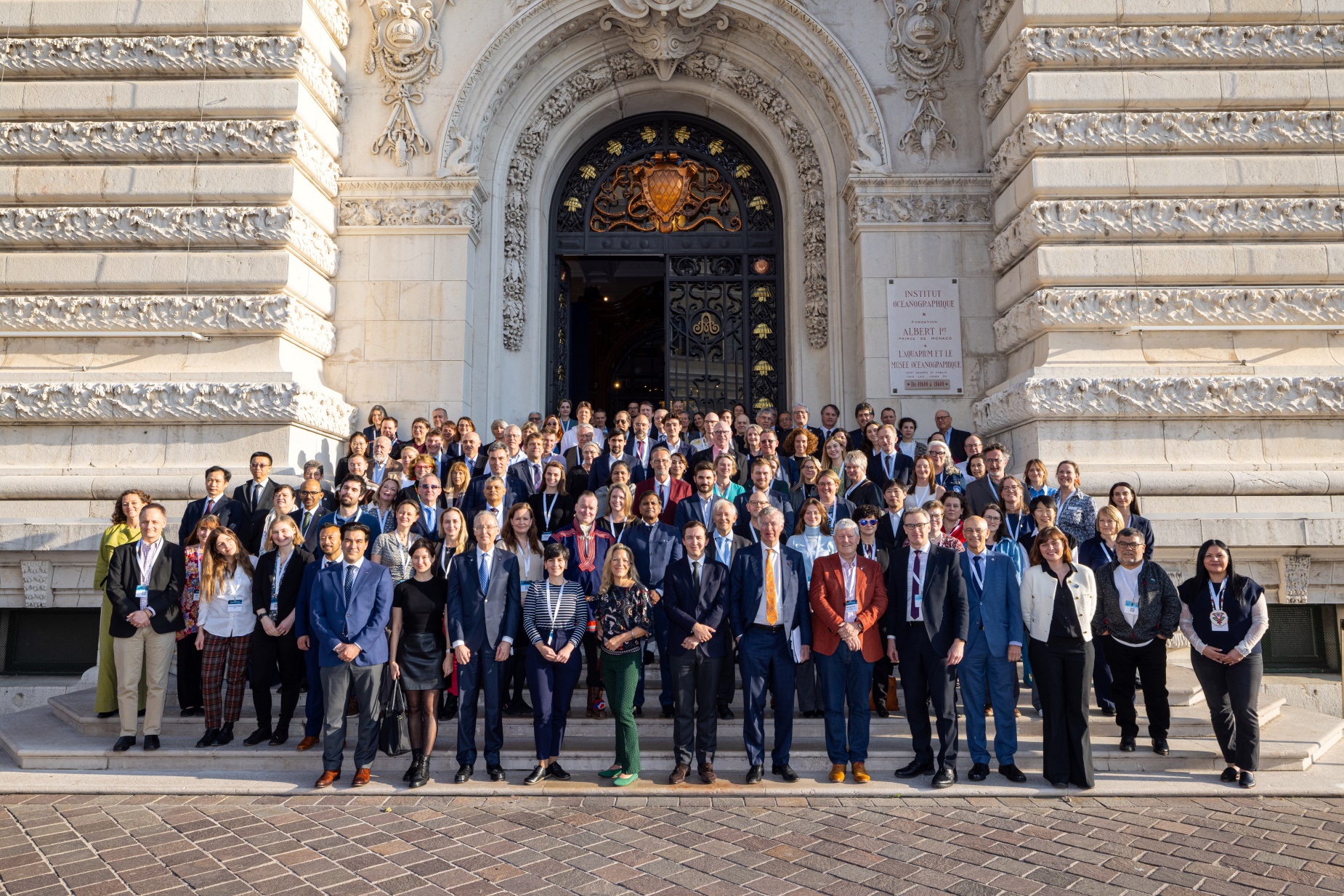
third Monaco Polar Symposium, held from 25 to 27 February 2026 under the theme “Enabling
the Legacy: Translating Polar Research into Action”. Jointly organised
by the Prince Albert II of Monaco Foundation, the Scientific
Committee on Antarctic Research (SCAR) and the International Arctic
Science Committee (IASC), in collaboration with the Oceanographic
Institute - Prince Albert I of Monaco Foundation, the event brought
together 170 participants from 31 countries and territories, spanning
polar science, governance, conservation, finance, and Arctic Indigenous
communities and organisations.
Under the guiding principle “Research
to Action”, participants identified 17 potential flagship initiatives
across five thematic pillars. The Call to Action seeks to advance these
proposals through international collaboration, co-production of knowledge, stronger governance and sustainable financing ahead of
IPY5.
As HSH Prince Albert II of Monaco
stated: “The years leading to 2032 give us a unique opportunity to build the
legacy of IPY5. We have a shared direction and a roadmap. Our duty now is to
turn them into coordinated, ambitious and lasting action for the protection of
the polar regions.”
FIVE PILLARS TO ADVANCE COORDINATED
POLAR ACTION
The 17 initiatives form an
interconnected portfolio addressing scientific, environmental, institutional
and societal priorities across five pillars:
·
Planetary
Risk & Science Diplomacy (4 initiatives): improving understanding of polar change and
translating scientific observations into practical tools for adaptation and
international decision-making. Proposals include reducing uncertainties around
Antarctic sea-level rise, developing locally relevant projections for
vulnerable coastlines and establishing a polar early warning system.
·
Digital
Territories & Data Infrastructure (3 initiatives): strengthening access to scientific
data and developing interoperable digital tools, including artificial
intelligence and digital twins, within ethical frameworks that respect
Indigenous Knowledge and data sovereignty.
·
Indigenous
Leadership & Co-Production of Knowledge (3 initiatives): establishing rights-based approaches
to research and governance, including community-led observation networks and a
proposed Indigenous Peoples’ IPY5 Secretariat to support meaningful
co-leadership.
·
Governance
& New Architectures (4 initiatives): reinforcing international scientific
cooperation, Antarctic marine conservation and long-term financing. Potential
initiatives include a Polar Science Funders-Investors Summit and a permanent
funding architecture for polar research.
·
Knowledge,
Narrative & Citizen Engagement (3 initiatives): connecting polar science with education, public
understanding and citizen participation, including proposals for an
international IPY5 education programme and community-led citizen science.
For Gary Wilson, President of
the Scientific Committee on Antarctic Research (SCAR), internationally
coordinated scientific efforts are essential: “The need for better
understanding leading to action is greater than ever and the need for an
internationally coordinated and collaborative research effort is greater than
ever.”
BUILDING THE PARTNERSHIPS AND
FINANCING PATHWAYS FOR IPY5
Beyond identifying potential
initiatives, the Call to Action invites the international polar community to
use the 2026–2032 period to establish the conditions necessary for their
development and long-term implementation.
A central priority is to address the
limitations of existing funding systems, particularly their fragmentation and
incompatibility with the timescales required for polar observation, scientific
infrastructure and international research.
The Monaco Polar Symposium Outcome
Report identifies five complementary funding approaches, including progressive
financing from pilot projects to sustained programmes, dedicated multinational
funding mechanisms, blended finance and wider engagement with non-traditional
funding partners.
As Matthew Druckenmiller,
President of the International Arctic Science Committee (IASC) and Henry
Burgess, its Former President (2022–2026), emphasised: “The long-term
observations, infrastructure, and partnerships that underpin international
polar research cannot be sustained through fragmented, short-term funding
cycles.”
The Call to Action also identifies
three cross-cutting priorities: recognising shared global responsibilities for
the polar regions; establishing stronger connections between science, finance
and international decision-making; and ensuring that equity and inclusion are
embedded in the governance and development of polar initiatives.
AN OPEN INVITATION TO CONTRIBUTE
To advance this collective effort,
the Polar Initiative has opened a Call for Expressions of Interest,
inviting organisations and individuals to identify which proposed flagship
initiatives they could contribute.
Through this process, the Polar
Initiative’s new Polar Programme Development Grant will support the
development of emerging ideas into structured, coordinated and fundable
international programmes.
Governments, research institutions,
Indigenous Peoples’ organisations, international institutions, funders,
universities, civil society and relevant private-sector actors are encouraged
to share their expertise, existing activities, capacities and resources to advance
dialogue and cooperation.
With IPY5 approaching in 2032–2033,
the Call to Action seeks to ensure that international polar cooperation moves
beyond scientific observation alone, creating the conditions for research to
inform policy, mobilise sustained resources and contribute to lasting
environmental action.